

By Nila Harris
Take me out to the ball game. Take me out with the crowd…okay, admit it, you’re singing along. Many have fond memories of America’s favorite pastime—baseball, whether watching it or playing it, most people have experienced this sport. And chances are, if you lived in the latter half of the 20th century in Northern Kentucky, you have been to Vater’s Playground to watch or play a game or two.
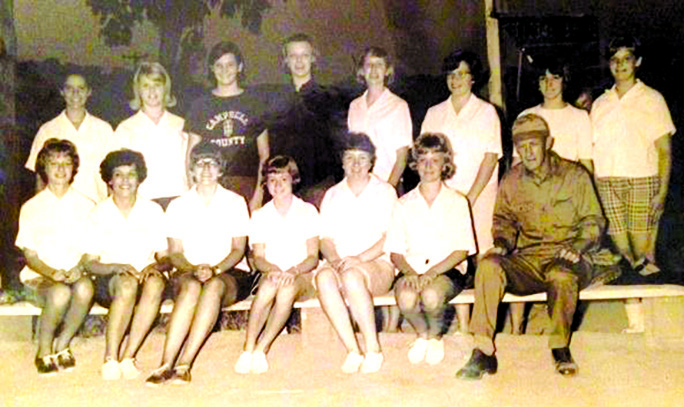
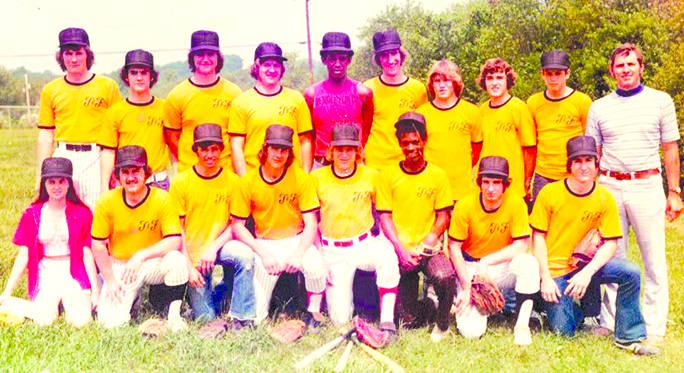
Vic Vater grew up playing baseball. In the late 40s, he managed a team in Campbell County and decided he wanted to create his own ballfield. In 1948, he enlisted the aid of Fred Trapp, a local excavator, to make a ballfield in Southern Campbell County. He and his wife Mary organized Knothole baseball, men’s, women’s, and co-ed slow-pitch softball leagues. Even after her husband’s death in 1975, Mary continued maintaining the fields, with the help of her children Connie, Kim, and Rick. Being the kids of ball parents, these three grew up playing baseball and softball and working or watching games when they weren’t playing.
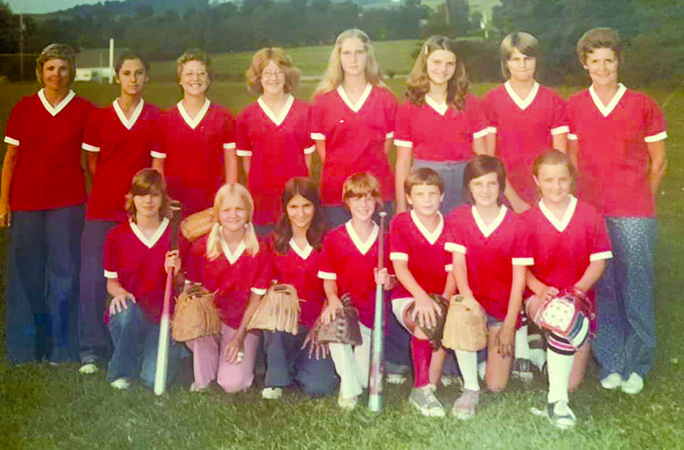
Billie Jo Belcher Chaplin not only lived across the road from Vater’s as a child but also went there to watch her dad Jim Belcher play. Chaplin and her brother Keith played in various leagues there. Chaplin played on a women’s softball league as a 7th grader for BH&T milk route. Another team she played on—It’ll Do—once won 25 games straight! That year they went on to win the league championship.
Her brother played Knothole, starting at age five. When Keith was around eight years old, his team, Vater’s Beauty Salon, won the Greater Cincinnati Knothole Championship. He played softball there as an adult with his cousin Rick Vater.
Pam Mains, a teammate of Chaplin, was also a scorekeeper for the Ranchhouse Restaurant team. Longtime softball player Stuart Stephens remembers Ranchhouse team player Darryl Griffith, hitting a ball off the roof of the Vaters’ home! Stephens himself first played at the age of 12 and stated, “I could throw just as hard as the (older) guys could.” He pitched, played shortstop, and “a little bit of everything.” Stephens remembers games being held five nights a week with tournaments on Saturdays and Sundays. He once played on a team with game wardens from surrounding counties. Additionally, he told of a state trooper team including undercover detectives whose names were not listed, for fear of retaliation from criminals. According to Stephens, there was one trooper who got a little belligerent in the stands one night. Stephens’ cousin Teddy Gregg was an umpire. When Gregg made a “bad call”, the trooper started cussing at him. Gregg finally told the man, “You have three minutes to hit the road,” and threw the man out of the game.
David Mattox shared a story of a Saturday night tournament in June 1985. Mattox came to the tournament “after only a few hours of sleep and a massive hangover,” but was “loose as a goose. So… my first at bat, I stumble up to the plate, hoping to be able to run the bases if somehow I could see the ball and make contact.” Mattox had a 38-ounce camouflaged bat which he named The Combat. He gave a mighty swing and nailed a homerun over a 300-foot fence.
Another homerun hitter was David King. “I hit my first homerun on that field (at Vater’s) and many more after that.” King started like so many other Vater players, playing Knothole, then going on to play softball as an adult. Ben Wolfe remembers seeing King “hit a lot of balls over the fence at Vater’s”. Wolfe played on the team Thompson & Flaugher, which won the league championship in 1975. He played on another team during a holiday tournament one season. He doesn’t remember the sponsor’s name, but “it was a horse stud service. Let’s just say that being on a stud service team was a unique conversation starter!”
Beth Cahill played on several different teams, including a team sponsored by Dr. J.C. Crowley known as The Scrubs. Cahill claims, “I grew up there—loved playing slow pitch softball.”
Some did not play but still have great memories. Teresa Spencer Monday used to go watch her dad, Danny Spencer play. “After a game, he would carry me on his shoulders.” Tonya Steele Hare also did not play but remembers her dad Floyd Steele coaching her older brothers’ team and going there as a family to watch them play.
Penny LaFollette Wheatley was on the It’ll Do team with Chaplin. “I took a hard shot to the eye three days before leaving for Florida for the first time. My eye was wrecked, and you could see stitch marks from the ball on my cheek. We just told people in Florida, I had been in a fight and had to flee the state.” Wheatley played on a team with Gillespie sisters Joyce Brown and Kaye Scaggs. In fact, all six Gillespie sisters played at Vater’s, plus their brother Gennie.
In the mid 60s, Joyce Mains Carson used to go to Vater’s with her best friend’s family to watch her friend’s father play. Later, “my sister-in-law-to-be invited me to play on her team in 1969. My sister Hazel and I played for Peoples Funeral Home later.”
Nancy Moreland Wood stated that playing at Vater’s was “the best time of my life, and I could not wait to get there.” She would hurriedly drive her Mercury Marquis from Falmouth, pay her 10 cents to park in the dusty lot, and probably changed her clothes while driving. Wood played on a team sponsored by her dad Ron Moreland.
Another teammate, Phyllis Elrod Kelsch stated that Moreland was at every game. Kelsch remembered that their team was Class B State Champions in 1981 and once she had to stop playing because “a bat was diving down at me!”
Wood stated that the team was made up of women from Pendleton, Campbell, and Bracken counties. Teammate Rella Gregg Keeton was pitcher.
“She was a great pitcher,” reminisced Wood.
Their uniforms were light blue T-shirts, shorts, and tube socks. They also wore a stirrup type accessory over their socks with their team’s color. The problem with the stirrups is that when you were sliding into base, it would cut into your skin and give you a “strawberry”. But I guess it was worth it, because according to Wood, Vater’s “was my happy place.”
Greg Valentine also loved playing at Vater’s. During one period, he played on three different leagues on Tuesdays, Wednesdays, and Thursdays. Then Vater’s tournaments and church leagues on the weekends. “There were nights I’d leave Vater’s, Mach 3, to play church league in Falmouth.” The first time he picked up his then-girlfriend, later-wife, he saw photos on the wall of her brothers Roger and David Johnston and realized that he had played against their team Cookie Jar Bakery at Vater’s.
Vater’s had other memories for children who grew up there. Many loved the playground yet were a little intimidated by the merry-go-round. Donna Smith said that the merry-go-round made her so sick she never rode it again. Gina Nordheim Adams remembers being thrown from it. “Shew! I thought I had died.” David Kidwell laughingly stated, “That merry-go-round was an equalizer. I bet St. Luke had a flight log of kids with broken bones, cuts, and bruises.” Lindsay Mortimer, who went to Vater’s to watch her mom and dad play, got hurt on another piece of playground equipment. She slid down a fire pole and broke her arm.
We can laugh about these adventures, but this could be part of the reason Vater’s shut down. Elmer Utz, who once worked for Mary Vater, said that she told him that the liability insurance was just too high to keep the place going.
Current themes resounded through the memory walkers: how much fun the place was, it was great entertainment for the family, and the Vaters were wonderful people. Mary Vater kept the place going for 50 years with “the only decent field around” and was “always maintained well” according to Eric Garrison. Garrison played there until “I was too old to play.”
Thanks for the memories, Vater’s.