

The man who knew too much
By Burton W. Cole
In 1956, filmmaker Alfred Hitchcock released one of his masterpieces, “The Man Who Knew Too Much.” It was a film full of suspense, intrigue and — despite the title — not knowing what was really going on.
Here we are 70 years later in 2026, and I think we’re all starring in our own version of “The People Who Knew Too Much.” Our lives are poorer for the lack of suspense, intrigue and the not knowing that made my childhood such a delicious adventure.
For example, when I was kid, the phone would ring — THE phone, mind you; there was only one in the house — and we would all race to answer it even though we had no clue who had dialed our number.
No screens displayed who was calling. Answering machines hadn’t been invented yet. Seriously. I am not making this up. The only way you could find out who was calling was to answer the thing.
Which we did. Chances were it would be a wrong number or it would be for your sister or worse, someone you never wanted to talk to again. Or maybe, Charlie Brown, it was the cute little red-headed girl.
Suspense. Intrigue. Thrills.
Another daily thrill was when the mailman came. Back in those prehistoric days, the mailmen rode dinosaurs to our caves and… no, wait, that was “The Flintstones.”
Anyway, there was no such thing as email, texting or any other sort of instant communication outside of the telephone. And if your sister was still on her call, you might as well write a letter. With pen and paper, and stamps and envelopes.
We slid our sealed letters into our mailboxes, put the red flags up on the box, and the mailman would pick them up. In not much more than a week, depending on if your buddy was too busy playing tag or riding bicycles outdoors to write, you would receive a return letter in the mail.
These days, I get alerts on my phone telling me what pieces of mail should be in my box when I get home. But most missives pop up in texts or emails or YouTube videos.
But back then, you didn’t know what letters or packages were coming or when. Even though we were told to wait four to six weeks for delivery, we raced out to the mailbox every morning after the mail truck came through to see what surprises had been delivered.
We might end up disappointed. The excitement was when we didn’t know. Each morning carried suspense, intrigue, hope.
When we struck out on a trip, we didn’t have GPS. We had folding paper maps which accordioned out wide enough to cover the whole windshield. If you couldn’t remember the route you plotted out in your head before you got on the road, chances are, you’d get lost.
Some of the most fun I had in my younger years was when I didn’t know where I was. In fact, when I was in college, I made it a rule to never take the same route twice. I knew that the university was somewhere about an hour and 45 minutes southwest of home. I made random south and west turns at every intersection.
I had no idea that I lived so close to a bison farm or that there were outdoor band concerts in the gazebo of a nearby town square (I still don’t know what town I was in) until I intentionally got lost going back to school.
Whether I wanted it to, the university always came into view about an hour and 45 minutes into my trip. But until then, I relished the suspense, intrigue and discovery of getting lost.
Now, thanks to annoying pieces of technology that we tuck into your pockets, we have instant access to maps, dictionary, encyclopedia, mail, scanner, phone, camera, calculator, store, television, music, tracker and other entertainment.
But we’ve lost a lot of suspense, intrigue and excitement. We no longer are curious about how we’re going to fill our day. Or curious about much of anything.
We’re the men and women who know too much.
Personally, we think Burt knows too little. Educate him at news@falmouthoutlook.com or on the Burton W. Cole page on Facebook. You know you can find both of those on the phone in your pocket.
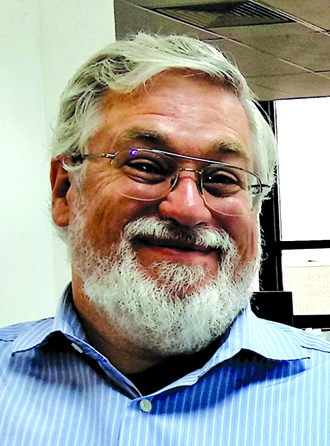
BURTON W. COLE, Editor