

By Jim Thaxton
FALMOUTH — During the July 9 meeting of the Kincaid Lake Sediment Mitigation Project, Kevin Rexroat from the Kentucky Department of Fish and Wildlife reviewed several of the mitigation proposals, including dredging and raising the dam, while pointing out the bureaucratic barriers they present.
He described for those attending the stakeholders meeting at the Kincaid Lake State Park Multipurpose Building how sediment is filling in the headwaters of one of the major tributaries feeding Kincaid Lake below Wampum Bridge.
David Deves, director of Kentucky Fisheries, touted Kincaid Lake as one of the better, if not the best, largemouth trophy bass waters in the state.
Even so, he confessed he often hears about the sedimentation problems filling up the lake. He reminded everyone that “these lakes have a lifespan.”
It was the second meeting for the sediment mitigation project. Following a brief overview of the initial meeting held in February, Director of Pendleton County Tourism and Economic Development Tami Vater and Magistrate Rick Mineer from District 4 shared their findings via photographs and a video of an on-water tour that they took to observe the lake’s sediment incursion.
The late Kentucky Soil and Water Conservation Commissioner, Marc Hult was fond of reminding farmers and municipality officials advocating for building dams and ponds that when you build a dam to impound water anywhere in Kentucky, “you are building a wetland for your grandchildren.”
Any farmer who has built, drained and dredged a farm pond can attest to the truth of Marc’s assertion.
The sediment is known to be the result of feeder stream widening, especially after heavy rains when they carry silt into the headwaters of the lake or pond. The silt settles and, over time, fills in the impoundment. This is a natural process.
Pendleton County Judge Executive David Fields raised the question about the broken valve that was supposed to raise and lower the lake. He asked if it had been functional if the sedimentation problem would still exist.
Rexroat stated that he believed that a functioning valve would not have prevented the buildup of sedimentation. However, there were plans to replace the valve.
The meeting paused for lunch, and as is so often the case, a lot of progress was made as participants digested their food as well as the information that was presented.
When state Rep. Mark Hart called the meeting back to order, it became clear that several things had to be in place prior to moving forward with another meeting.
Everyone in attendance seemed to agree that Partners of Kincaid, Pendleton County Economic Development and Tourism, and the Department of Fish and Wildlife have to collaborate to begin investigating options to complete a Phase 1, which is assessment and cost analysis for addressing the siltation collecting in Kincaid Lake.
While, as Deves pointed out, the siltation in Kentucky’s lakes is a statewide problem, it if not too difficult to estimate the cost of restoring the lake to the original conditions when it was built in 1961.
Just north of Pendleton County in Sharonville, Ohio, Sharon Lake was drained last year and is undergoing dredging to remove more than “five Olympic-sized pools” of sediment.
The cost to complete this project is estimated to be $15 million. Sharon Lake is only 35 acres, about 1/10th the size of Kincaid.
The next meeting will be set after Phase 1 is completed.
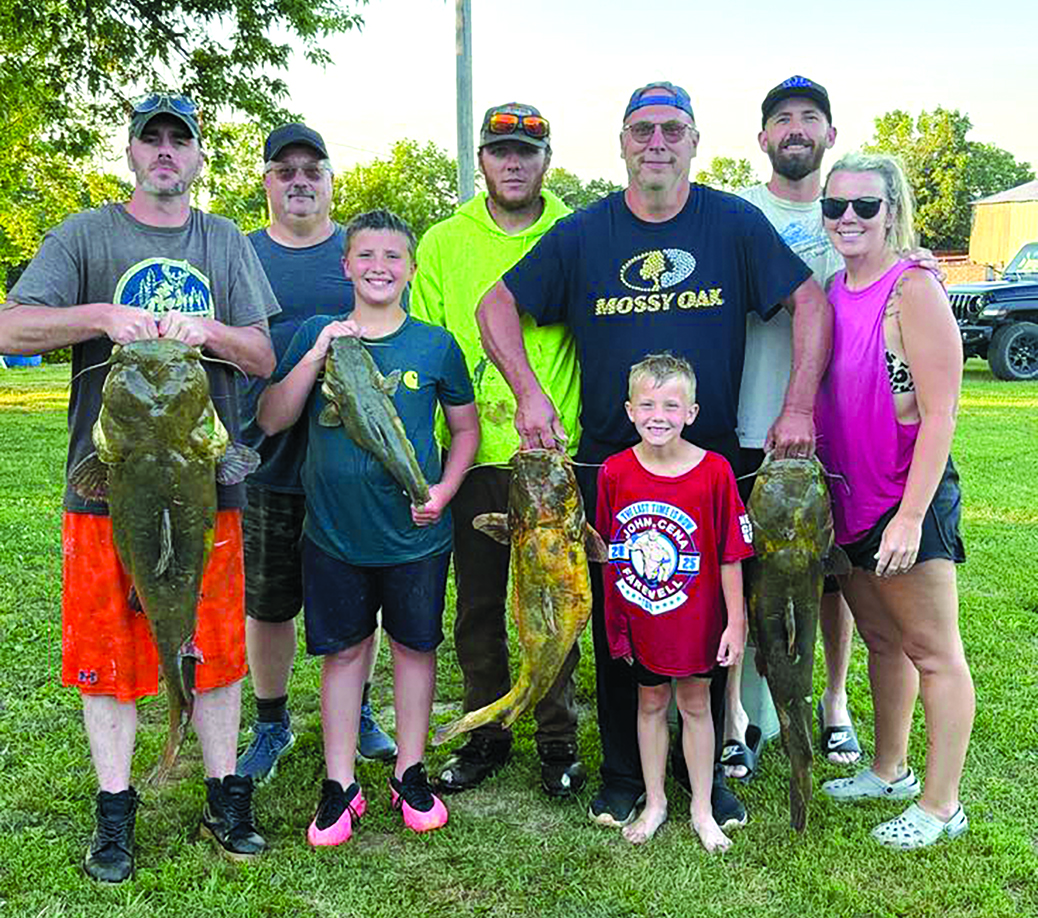
It’s a family fishing affair with Jory Wilson, Ray Parsons, Memphis McClanahan, Tanner Pugh, Darell Pugh, Memphis McClanahan, Blaine McClanahan, and Kelsie McClanahan. Their haul earned them 180 pounds of fish. Photo courtesy of Kelsie McClanahan
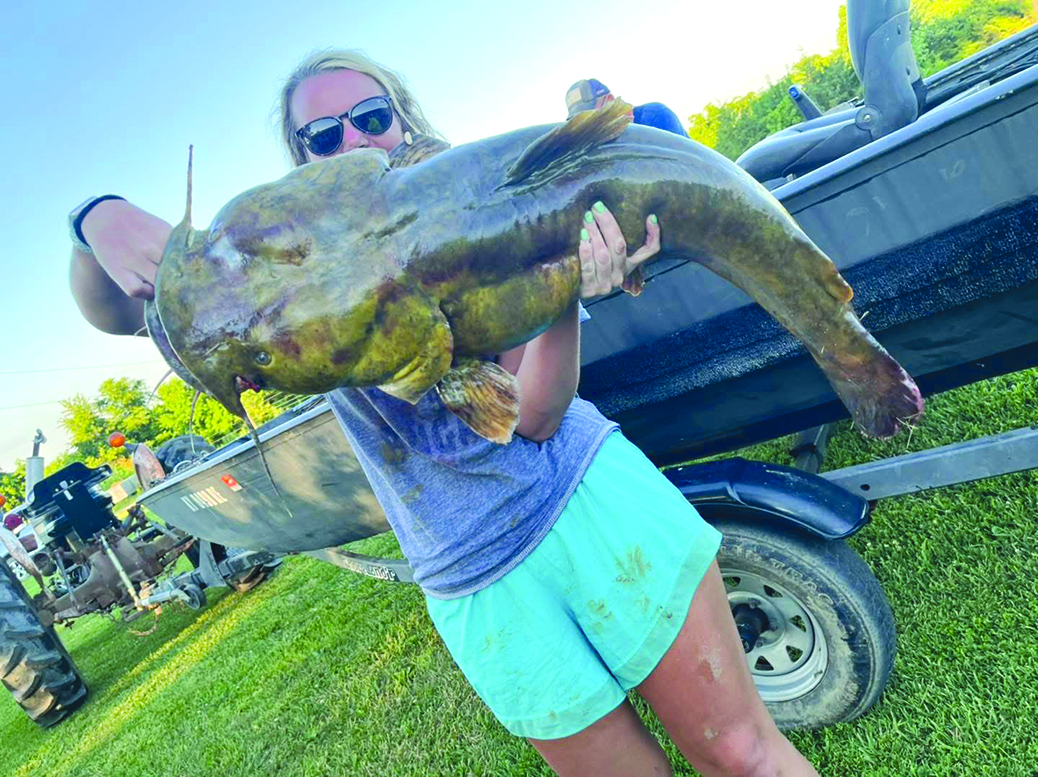
Kelsie McClanahan proudly displays a 36-pound flathead she caught in the Licking River at McKenneysburg. Photo courtesy of Kelsie McClanahan