

By Carolyn Reid
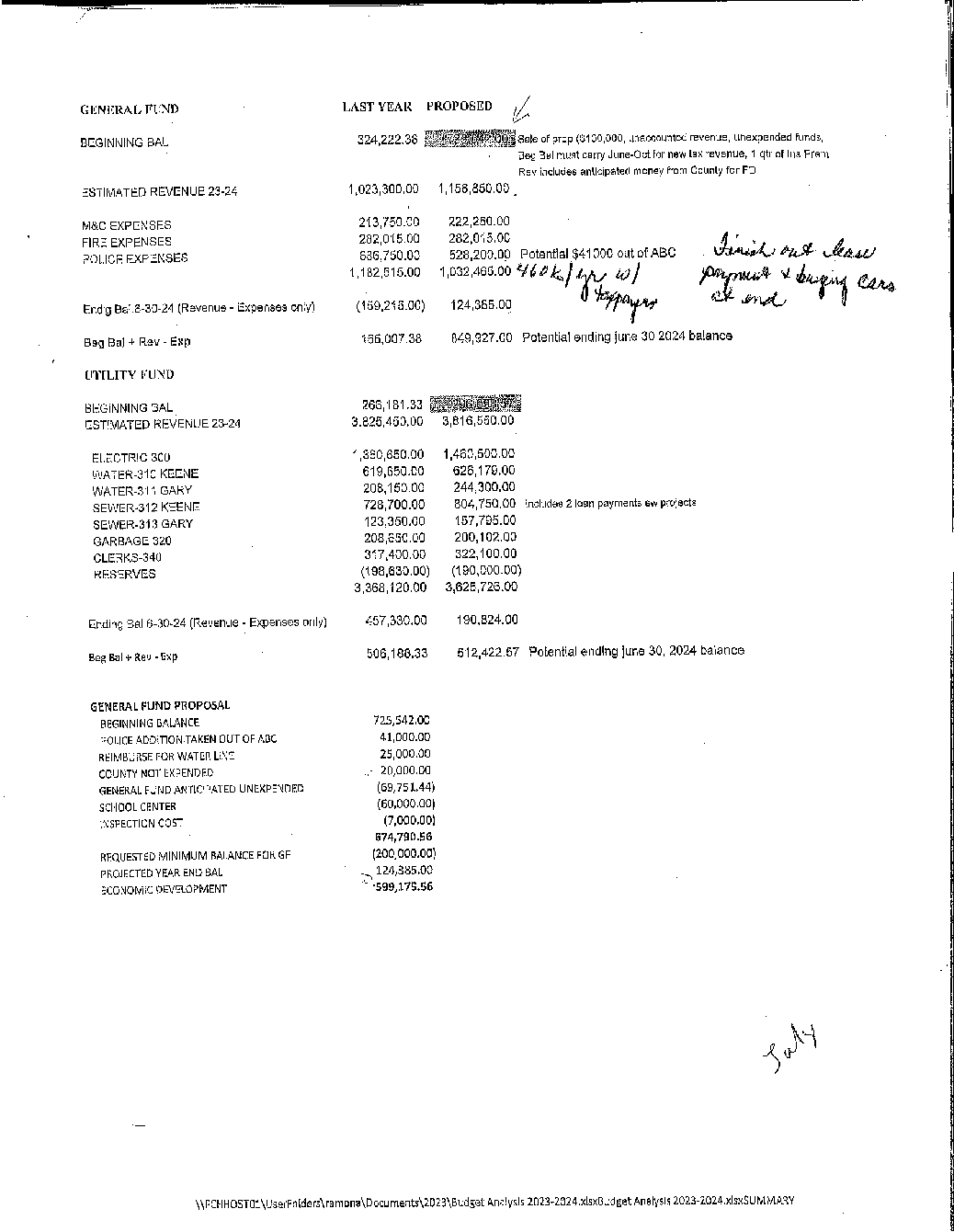
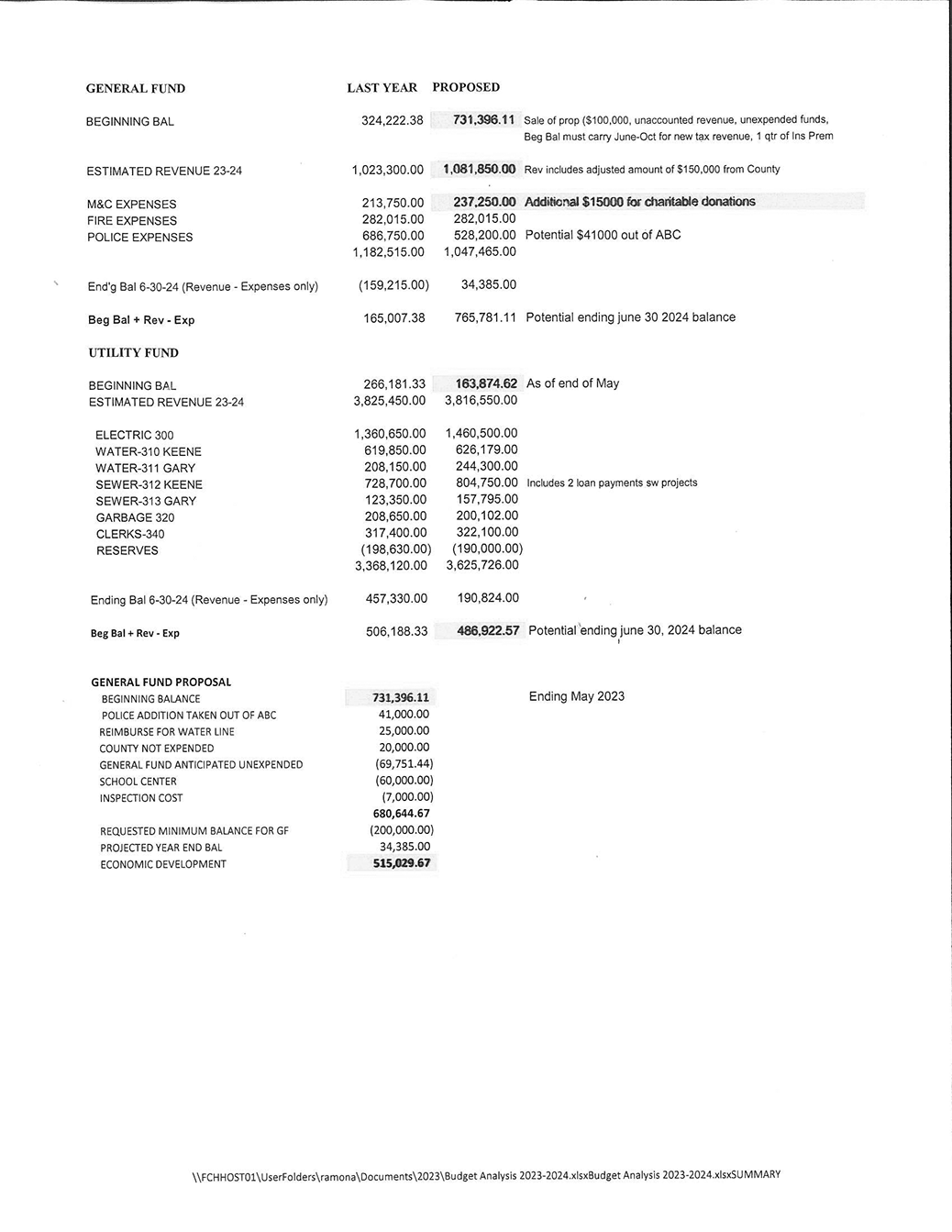
The special meeting Tuesday, June 6, was supposed to be a quick affair, according to Mayor Sebastian Ernst, but that did not turn out to be the case as the council requested a line-by-line discussion of the budget that was to allocate $200,000 for a splash pad (a total the mayor insisted was likely high) and over one half million dollars to “community development,” as the line stated. The numbers also reflected zeros in county services.
Ernst began the meeting by noting the budget had been amended to include $15,000 in charitable giving, a nod to the earlier commitments that had been made to organizations such as PC Search and Rescue and the Patriots Youth Sports program. He also noted the fire agreement had to be amended from his expected $225,000 to $150,000 after the joint meeting of the council and PC Fiscal Court landed on that number rather than the $225,000 he insisted the city needed to cover the county for fire, lift assists, and landing zones.
The examination of the budget began with revenue which equals over $1 million for the coming year. City Clerk Ramona Williams added the opioid monies from the government had not been included in the numbers, so she suggested council revise those numbers by $2,400-2,500 additional. The monies could be available for another 10 years, and they are to help with opioid mitigation. Opioid monies are restricted to drug mitigation efforts.
As they looked at the police budget and the cut in needed funds due to the expiration of vehicle leases, Councilperson Bobby Pettit asked how many officers were accounted for in the proposed budget. Those leases will soon be up, and the money will allow five full-time officers as of June, Ernst responded. Councilperson Joyce Carson took the opportunity to suggest the city hire another part-time police officer after the five to get Falmouth to help get the city to 24/7 coverage, and Ernst explained that would take more of the budget, taking a $34,000 surplus to a deficit. Carson replied they could “take [the money] out of somewhere else.”
Ernst continued to the general fund items, explaining those expenses were mayor, council, staff, the police department, and the fire department, and he mentioned the $565,000 had come down a little due to the fire agreement that was set by Falmouth City Council and PC Fiscal Court, but he still wanted a line item of over $500,000 set as community development. He explained those monies would allow for developments in the city.
Carson noted the county services of animal control, planning and zoning, and code enforcement were all zeroed out on the budget. Ernst responded those services are provided free of charge through the county, and the city residents are being charged as county and as city residents—double-billed. Ernst said, “If that is not the case, we need to start charging [the county] for our services,” referring to city police backing up the county outside city limits as an example. He also mentioned he wanted to look into other city services that are being used by the county to see if the county needs to be charged for those.
While Councilperson Amy Hurst and Carson said they felt those items should be put back in place, Ernst said they could look into interlocal agreements with no monetary exchange.
Councilperson Luke Price asked City Attorney Brandon Voelker if county planning and zoning could not come in and enforce city planning and zoning by law.
Voelker replied the city has a zoning plan that is separate from the county planning and zoning, and it has a separate board of adjustments. If the city paid the county, the coverage could be had from the county.
Code enforcement, he said, has to be designated by the city, either by using the code enforcement or by using city police, a system Carson noted did not work well before.
After some questions, Janet Scanlon, chair of PC Planning and Zoning, responded from the audience that the city would have to amend the ordinances.
Ernst returned to the finances, saying his question is should the city charge the county for their services if they charge for services such as planning and zoning.
Councilperson Sabrina Hazen asked why the city is having to pay for the services, and Hurst explained the city helps pay for overhead, trainings, and other expenses. Hazen responded with the same question, but Voelker explained the personal needs are paid for by those who need it, such as property zoning changes. Scanlon also said the commission had many public hearings.
Hazen asked if their fees could be charged per job, and Ernst stated he would consider a per-job billing. Price responded he would be open to a per-job bill for planning and zoning, but he wanted code enforcement to stay because the code enforcement should not be handled by the police because that was not successful in the past, and the police need to be police officers.
When Hurst said planning and zoning is used frequently, “and we are city,” Ernst responded the county is doing well enough financially to be able to invest $1 million of their budget, and he felt they could fund code enforcement.
After some discussion regarding keeping code enforcement, Ernst mentioned the $34,000 surplus he hopes to keep, and that would cut into that surplus. Carson suggested he could take it out of the $565,000, and Ernst responded that is a one-time expense that should be allocated for “makeover for the town, fixing water run-offs and other issues. He argued last year the city operated on a $100,000 plus deficit. This year, he plans to have a budgetary surplus.
After some more discussion about the more than one-half million-dollar line item where Carson insisted it should be put into line items, Voelker said expenditures over a certain amount set by council (the state has set $40,000 as the maximum expense for individual decisions by the mayor), the mayor would have to come to them for approval. They could agree to a lower number.
When more talk continued about the line-item, Hurst said again they needed to set line items for the large sum rather than having it alone as a line item. Ernst stated that money would not exist next year, and it needed to be applied to expenses that are not recurring. Hurst asked what expenses would not be recurring in the budget, pointing out anything that is done with the money would have a recurring expense.
Hazen asked what would fall under the half-million-dollar line item, and Ernst said things such as water and sewer and other utilities are under a different fund, and “you don’t want to use that money for utilities,” referring to the difference in budgeting for those departments versus the city. Some were agreeable to having the right to approve the possible use. The middle school would necessarily be funded from the half-million.
Ernst once again stated sewer lines could not come from the half-million because of the separate budgets.
Hazen asked what was included parks and streets (with $30,000 assigned), and Williams said the skate park and Veteran’s Park needed upgrades and maintenance. When she asked what community development would be done, Ernst replied he could bring things up in council so everyone could approve. Council members could also see things that could be done and bring it to council. She asked if the money could be used for storm drains, and Ernst replied that could be addressed from that budget, but not sewers and other utilities.
Pettit clarified community development cannot always be seen, and then he returned to animal control. Ernst once again said that would cut into the $35,000 surplus. Hazen asked if we would give up coverage with a $0 line item, and Ernst responded the city would have no surplus if they gave the county the money. Hazen asked if the city had enhanced services for the money, and if it did not, she questioned why the city paid for it as it pays for additional law enforcement, for example. Ernst reassured council the city would not lose services.
He argued the money would be invested into the city in order to attract others to the town, bringing in tax revenue. He explained the money came from savings such as a lack of police coverage during after January 1 until the police department was reinstated along with other departmental savings and property sales.
Carson reiterated they had money for another police officer based on the half million plus, and Ernst argued, “No we do not, Joyce.” Pettit clarified they had no extra money for the police department, and Ernst said they had four officers plus a part-time officer had just been added. The goal was to have five officers, four full-time and one part-time, but January 2024. He reminded council the officers’ pay had been raised, and the city cannot afford 24/7 coverage now. Hazen suggested staggering schedules more between the police department and the sheriff to get to 24-hour coverage.
Hurst reminded Ernst the county pays for Air Evac, and that covers the city, and Carson asked Ernst why not get rid of the town and be done with it?
Council held more discussion about the police department, including the amount saved by having a retired police chief and less overtime. While some overtime is needed, they acknowledged, due to court, much has been cut, saving the city money.
As the council made it to the utilities funding, Ernst explained the wholesale rates for water were still being studied, reflecting on how much has been lost to the city due to the fact this has not been studied since 1988 when the rate was $1.89 per 1,000 gallons. He expects that income to increase sharply once the study is finished. Because they are waiting, the water cannot be truly budgeted.
Williams explained utilities have employees moving from one department to another. They also noted the chemicals to treat water have increased sharply due to new chemicals being required by the state.
The ARPA funding, separate from the one-half million, will be used, Ernst plans, for the splash pad and common plaza area and fire hydrants because it can be used for any needed expenses. Those would take $200,000 with the rest going toward fixing the old school center roof. The LGEA amounts to over $53,000, and nearly half of the money will be used to add new windows and doors for upstairs on city hall. $35,000 is allocated to parks and streets, and another $340,000 in road aid will get some streets milled and repaved.
A committee will be formed to designate what 10 city streets are priority. Carson suggested water lines be fixed as streets are redone, reducing the need for more digging and disturbance.
Carson also asked that more money be designated for fire hydrants.
The council also looked at the school building report. The findings suggest little asbestos and lead paint, and the mold issue should be mitigated once the roof and water lines in the building are fixed). One item in the report says the foundation along the eastern side of the building is cracked, and the eastern wall is pulling away. Ernst says the total cost to repair the building will be approximately $1 million. Hermes Construction inspected the building.
Pettit asked if the money for the splash pad included the property along with the construction. Ernst said only the splash pad will not take $200,000. The roof for the building will take around $248,000. ARPA money has to be spent by the end of 2024. Carson pointed out trees need to be cut from the power lines, and the $200,000 could be used for that because the city has to pay the electric company to do it. Hazen asked why that was on the city rather than the property owners, and council explained the city was responsible for clearing the lines.
Ray Riley, a city resident, reminded city council of his appearance after the rain storm in January that sent water from the justice center construction into his basement. He clarified he had no problem with a splash pad or anything the council did, but he knows the city is responsible for the sewer lines, and he said someone from outside the area came to look at the sewer lines now long after the incident and the clean-out that resulted, and that person said the lines were a disaster. He asked the council if a camera could be purchased to mark the lines. “Gary Lea is the only one in this city who knows how these lines run, and he will be retiring some day.” The cost of a camera, he was told, would be approximately $40,000, and council discussed the possibilities of purchasing a camera. (Later, Ernst told the Outlook the camera in Harrison County Water District could be used at any time by the city, eliminating the need for purchase.)
When discussion continued on the budget and changes that needed to be made, Ernst asked for the working budget to be voted on. The council wanted a rewrite, and Ernst stated the vote could be taken as it was, with changes and other not formalized. Pettit asked why he was pushing for the vote, especially considering the council received the amendment only 30 minutes before the meeting began.
Price reviewed the changes, and then gave the opinion council should be required to vote on expenses over $10,000. He expressed concerns over the fire hydrant replacement, feeling more needed to be replaced. He continued with concerns regarding the school center and the splash pad, citing the need to possibly change that item.
Carson and Hurst contacted the Falmouth Outlook later to go on record they believe council should handle the money even more conservatively. "I still think we ought to get bids on EVERYTHING before we spend another penny!" Carson said. "Including the roof [of the old school center]. Another three to four months won't make a difference since it's sat there for this long already. We have the building, so we need to do something down the road, but let's wrap ourselves around the total costs."
After Hurst stated she wanted to see the revised budget formalized, Ernst again asked for the approval at the current meeting. Hurst wanted camera quote, and Price wanted line items. Carson again stated she wanted code enforcement to stay, and Price wanted an official revised copy. Voelker held a second first reading, saying the changes required another first reading. The public, he said, has notice another meeting and a second reading would be held in two weeks.
After the first reading, Price moved to adjourn the meeting. After a second, the meeting went into caucus.
The special meeting also saw the reappointment of Jeff Carson to the tax adjustment board. The vote was approved with five votes. Councilperson Joyce Carson abstained.
The meeting was recorded, and the recording can be found on the Falmouth Outlook Facebook page.