
By Nila Harris
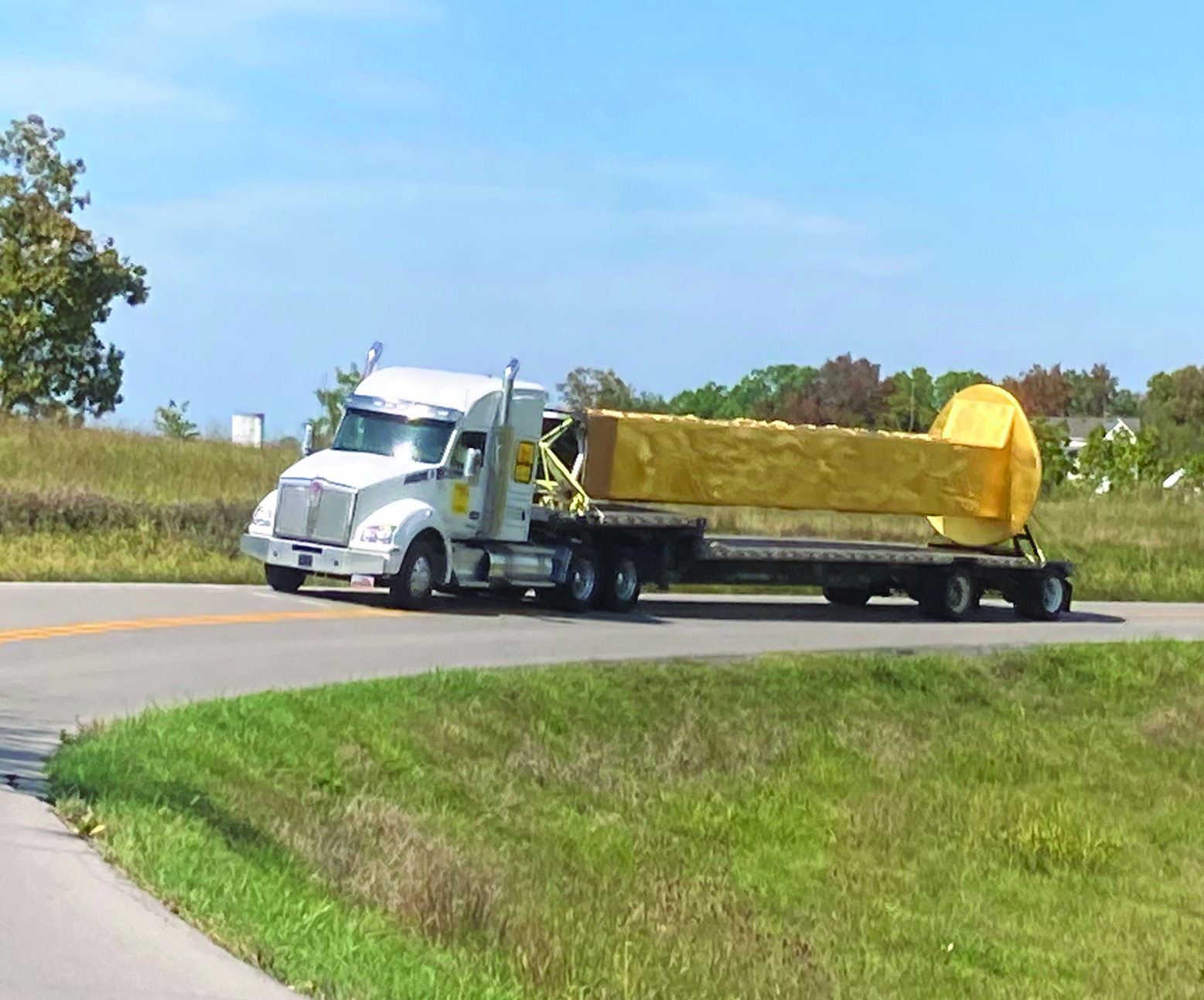
In an art studio in western Pendleton County, a national treasure was created. Artist/sculptor Douwe Blumberg and his team created a 43-foot-tall golden spike to commemorate the 150th anniversary of the transcontinental railroad. This monument is currently on a Driving of the Spike tour and has several “whistle stops” before it makes its permanent home in Brigham City, Utah.
Blumberg’s wife Marci knew that her husband was a history nut and always looking for new ideas of art pieces to create. When she discovered that the Golden Spike Foundation was wanting to commission a sculptor to create a public art piece that celebrates the “power and diversity of those whose labor and sacrifices contributed to the creation of the transcontinental railroad” (denvergazette.com), Marci knew this would appeal to her husband. Douwe along with approximately 240 artists, submitted resumes and portfolios. From that group, there were five finalists who were given a stipend and had to come up with an idea to represent the impact of the transcontinental railroad and its completion in 1869. Douwe thought of the diverse people involved in the railroad construction and the technology that fueled its innovation. He portrayed this in his presentation to the foundation, and his idea was selected.
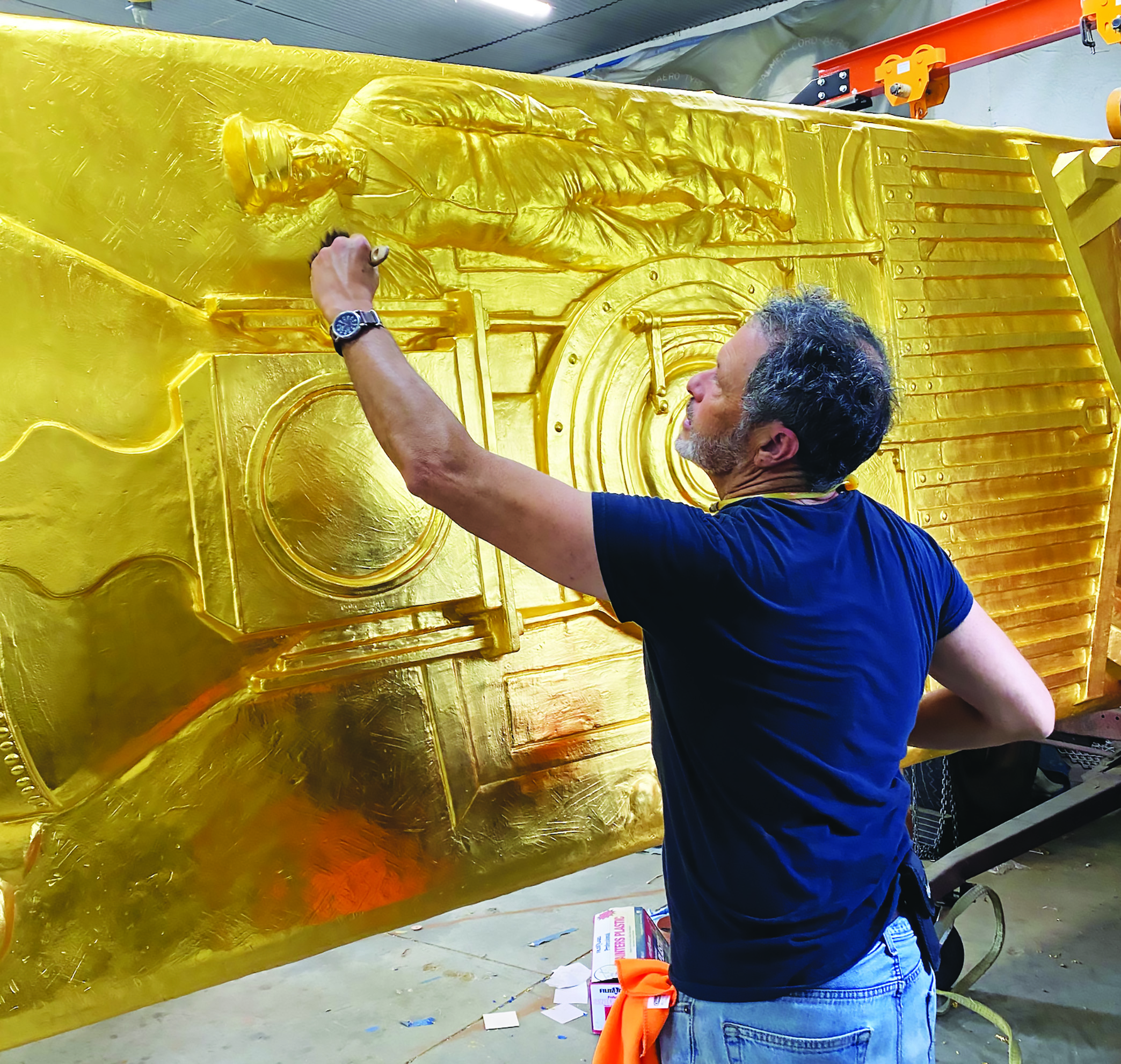
The 43 ft., 8,000 lb. monument took six months of engineering and planning, and an additional two years and three months of “hands-on work”. It was completed this September. Two sides of the gold-leafed, aluminum structure represents the Union Pacific and Central Pacific railroads, which traversed east and west across the United States. The faces of the individual workforces are shown on these sides. The Union Pacific which consisted mostly of a European American workforce with some freed slaves and several veterans, is represented by the faces of these individuals. “The Central Pacific side used a primarily Chinese workforce, which is reflected in that side’s sculptures,” informed Douwe. A third side shows the impact on the Native American people who inhabited the lands where the railroad was established. And the fourth side shows some of the technology of the era--featuring railroad, bridges, telegraphs, blacksmithing. Most of the work on the monument took place in Demossville, Kentucky, with the panels being sent to a foundry in Oklahoma. The monument has an internal structure and sides. The sides were sculpted in clay, then panels were taken to the foundry. People at the foundry made molds of the panels, then cast them into aluminum. Douwe hired a gold-leafing sculptor who trained Douwe and his staff how to do the gold-leafing. Ironically, Marci who is NOT an artist by trade, was the best at gold-leafing and worked side by side with her husband on that part of the project. There were 35-45 people who worked on the monument, but there were never more than six people in his studio at a time.
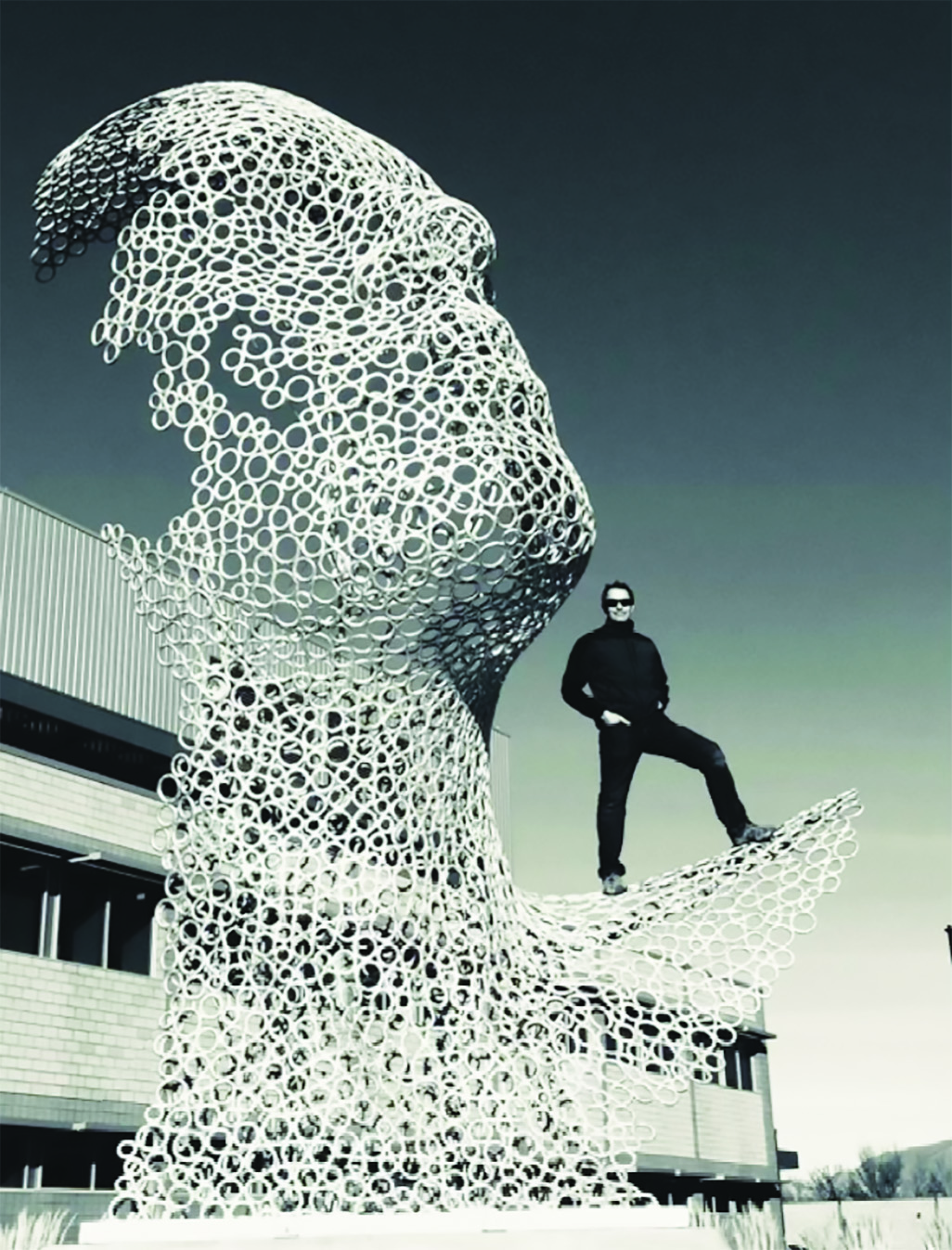
Douwe Blumberg stated that he “studied sculpture in school, then attended USC’s Idyllwild school of arts and music, followed by apprenticeships”. He has spent the last 15 years specializing in public works, which is a “hard gig to get into. I’ve been really blessed to have wonderful opportunities”. He has had over 200 public and private commissions, in addition to numerous awards. You may see some of his beautiful creations at https://www.douwestudios.com/artist.
The Golden Spike Monument is set to have its permanent installation at Brigham City, Utah in the summer of 2024. You may find more about the project and the monument’s tour at https://spike150.org/driving/.